How to Keep Hotel Staff from Wasting Time on Routine Work
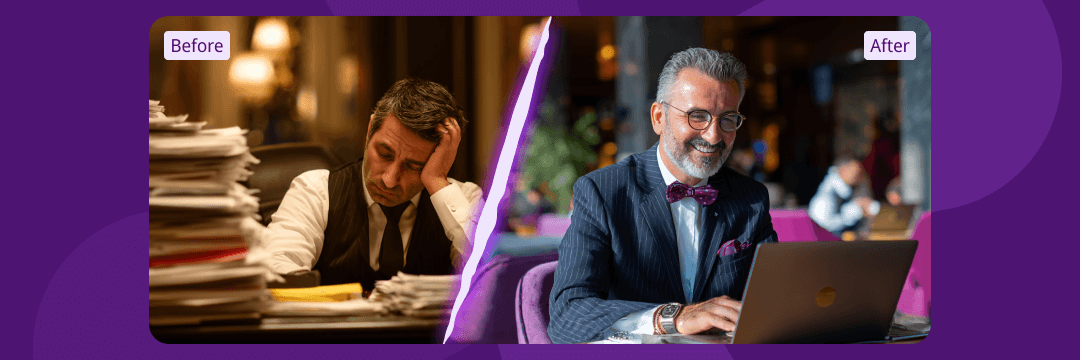
Running a hotel involves a multitude of tasks every single day, many of which are repetitive and time-consuming. Staff must constantly update room availability, manage bookings in multiple channels, respond to guest inquiries, and generate reports to track occupancy and revenue.
Doing all of this manually can eat up countless hours and leaves plenty of room for mistakes, from overbookings to missed reservations or delayed communications — errors that can quickly hurt both guest satisfaction and revenue. Fortunately, modern hotel management software provides a smarter way to handle these challenges. It helps hotels streamline operations, improve accuracy, and ultimately save staff time while enhancing overall hotel operational efficiency.
How Manual Operations Waste Your Team’s Time
Running hotel operations manually can be exhausting, and it touches almost every part of daily work:
-
Keeping track of room availability: Trying to keep track of which rooms are available by hand is time-consuming. Staff have to constantly update logs, check paper notes, or double-check spreadsheets. Mistakes happen, rooms get double-booked, and the front desk ends up putting out fires instead of helping guests.
-
Checking reservations across channels: Most properties sell rooms through multiple channels — their website, online travel agencies (OTAs), or even phone bookings. Manually checking all these channels to make sure reservations match up takes forever. One missed update can mean an angry guest and extra work fixing the mistake.
-
Creating reports: Pulling together reports by hand is another huge time sink. Whether it’s occupancy, revenue, or performance metrics, collecting data from multiple sources is slow and prone to errors. That leaves less time to actually act on the insights the data provides.
-
Other repetitive tasks: And it doesn’t stop there. Updating guest info, issuing invoices, or coordinating housekeeping schedules — these tasks all eat into your team’s day. Each minute spent manually entering information is a minute not spent improving guest experience or running the business.
How to Automate Booking Management with Exely Channel Manager
As mentioned, manual updates across multiple booking platforms can take hours and create opportunities for mistakes.
One of the most powerful tools in hotel automation is a channel manager. For example, Exely Channel Manager automatically updates room availability and rates across all OTAs as well as the hotel’s website, so hoteliers don’t need to adjust each platform manually.
As soon as a room is booked or cancelled, availability is updated in real time across every channel. This instant synchronization not only reduces the risk of human error but also ensures that guests always see accurate information that prevents overbookings and booking conflicts.
Integrating a hotel booking engine like Exely Booking Engine with the channel manager also opens the door to more direct bookings. Hotels can rely less on commission-heavy third-party platforms and offer guests a seamless booking experience. For staff, this automation means less time spent juggling multiple systems and more time focusing on providing excellent guest service.
How to Save Time on Reporting with a PMS
Reporting is one of those tasks that can quietly eat up hours every week unless you have the right tools. This is where hotel software solutions truly make a difference. Modern property management systems (PMSs), like Exely PMS, automatically collect and organize key data, giving managers a clear view of occupancy, revenue, and bookings with daily, weekly, or monthly breakdowns. Instead of spending time compiling spreadsheets or chasing down numbers, managers can simply generate reports and instantly see how the property is performing.
A PMS also simplifies the administrative side of hotel operations. Tasks like invoicing, check-ins, and check-outs become faster and more accurate, freeing up the front-desk team to focus on guests instead of paperwork. Online check-in and automated data collection reduce manual effort even further, cutting down wait times and making the arrival process smoother for everyone.
With these tools in place, hotel teams can manage a high volume of tasks efficiently. Managers have access to reliable insights that help them make smarter, data-driven decisions — from adjusting room rates to identifying booking trends. The result is not just efficient hotel operations, but a better guest experience overall.
Other Advantages of Hospitality Software
The value of hospitality software goes far beyond simply saving time. It changes how hotels operate on a daily basis, helping teams work more efficiently, improving guest satisfaction, and ultimately boosting profitability.
1. Smarter operations and happier staff
Automating repetitive tasks allows hotels to reduce overbookings, minimize errors, and keep day-to-day operations running smoothly. Staff no longer have to spend hours on tedious administrative work, which not only boosts morale but also makes the team more productive.
Automation also makes it easier to capture direct bookings through the hotel’s booking engine while reducing reliance on commission-heavy OTAs. This not only improves profit margins but also strengthens the hotel’s relationship with its guests, creating a more direct and personal connection.
2. Personalized guest experiences
Things, like automated guest communication, help hotels take the guest experience to the next level by ensuring interactions are consistent, timely, and personal. Hotels can automatically send booking confirmations, pre-arrival instructions, reminders, post-stay surveys, and promotional messages. This way, every guest receives accurate and friendly communication without adding extra work for the staff.
When these tools are integrated with a PMS, hotels get a complete view of each guest’s history, preferences, and previous stays. This makes it easy for staff to provide personalized service without manually tracking every detail. The result is stronger guest loyalty, more repeat visits, and smoother, more memorable stays for every guest.
3. Smarter, data-driven revenue management
Automation also completely changes the way hotels handle revenue management. With real-time dashboards and automated reporting, managers can instantly see occupancy levels, revenue trends, and booking performance. This level of transparency makes it easier to make quick, informed decisions — whether it’s adjusting room rates, optimizing staffing, or running targeted promotions.
Rather than spending hours gathering and analyzing data manually, managers can rely on hotel management software to deliver actionable insights immediately. Over time, this approach creates a more agile and profitable operation, giving teams the freedom to focus on strategic growth instead of repetitive administrative tasks.
4. Building a motivated and resilient team
Perhaps the most important benefit of automation is how it supports the people who make the hotel run. By removing repetitive administrative tasks, staff can focus on what they do best: delivering exceptional experiences to guests. When employees have the freedom to engage with guests, solve problems creatively, and take pride in their work, job satisfaction naturally increases.
Happier, more engaged staff provide better service, strengthen guest relationships, and generate positive reviews. By embracing the full range of hospitality software benefits, hotels can create a workplace where technology enhances human effort rather than replacing it. The result is a more motivated team, smoother daily operations, and a stronger, more profitable business overall.
Conclusion
Automating hotel operations turns hours of manual work into seamless processes. With tools like a PMS, channel manager, and booking engine, hotels can reduce errors, improve efficiency, and focus on delivering better guest experiences, as well as boost staff productivity and profitability.
Frequently Asked Questions (FAQ)
-
How much time can a hotel realistically save with automation?
Time savings vary by property size and operations, but many hotels report saving 10–20+ hours per week for administrative tasks when using a PMS and channel manager. -
Is hotel management software difficult to implement?
Most modern solutions are designed for easy onboarding, often with guided setups, tutorials, and customer support. Training staff typically takes just a few days. -
Will automation replace staff?
No. Automation handles repetitive tasks, freeing staff to focus on guest services, problem-solving, and tasks that require a human touch. -
Can small hotels benefit from these tools, or are they only for large properties?
Hotels of all sizes benefit. Small properties gain efficiency and reduce errors, while larger hotels can manage more complex operations at scale. -
How quickly can hotels see a return on investment?
Many properties notice measurable improvements in efficiency, guest satisfaction, and direct bookings within months of implementing automation.