Hotels Without Staff: Myth or Reality? The Future of Automated Hospitality


Imagine arriving at a hotel late at night. No front desk lines, no waiting for a key, no waking anyone up. Instead, you check in via an app or a kiosk, grab your digital key, and head straight to your room. This isn’t science fiction — it’s the reality of “hotels without staff” or highly automated hotels.
What Exactly Is a "Staffless" or Highly Automated Hotel?
“Staffless” doesn’t mean humans are gone completely. It’s a model where technology handles routine tasks like bookings, check-ins, and service requests, while staff step in only for complex or unusual situations. Some hotels are fully automated, while others use a hybrid model, but the goal is the same: smooth, efficient operations without compromising the guest experience.
Automated hotels come in all shapes. Capsule hotels, boutique properties without reception desks, and aparthotels with digital key access all rely on smart hotel technology to make stays effortless. Some even take it further, like Henn na Hotel in Japan, famous for its robot staff that check guests in, deliver luggage, and answer questions.
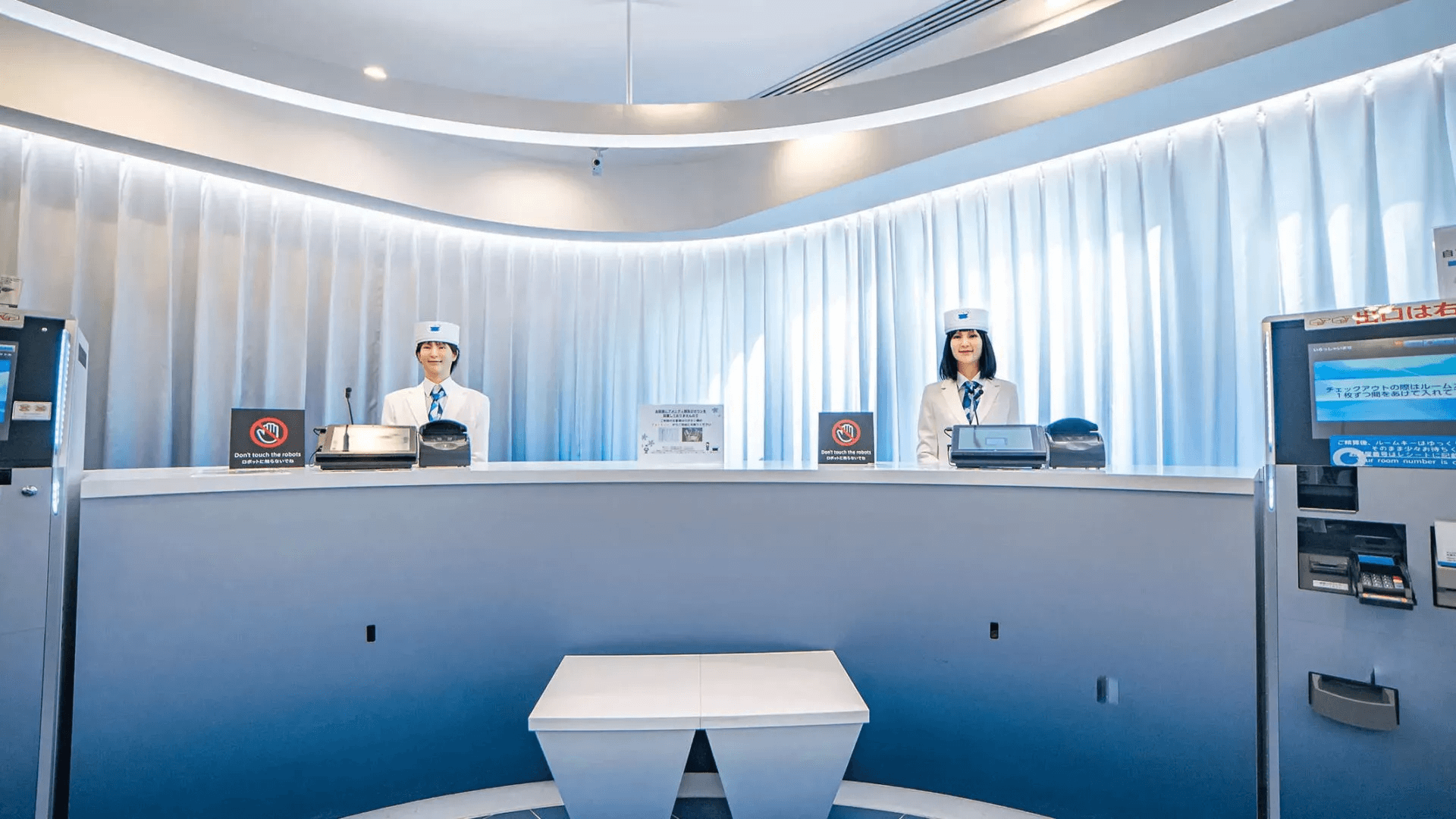
So, what makes a hotel truly staffless? There are four key criteria:
1. Automated booking and payment
This is the foundation. Without a front desk, guests need a website with a hotel booking engine and secure payment systems that operate 24/7. Such systems allow guests to:
- Choose their room, dates, and extra services themselves.
- Pay securely via integrated systems, anytime, 24/7.
- Receive instant confirmations and step-by-step instructions for arrival.
2. Automated check-in and check-out
To let guests arrive at any hour without waiting, check-in and check-out must be automated. This is how contactless hospitality became a reality.
After booking, guests receive electronic keys. Smart locks track check-in times and provide access to rooms. When it’s time to check out, rooms are automatically blocked. Self-service kiosks simplify the process further. Guests find their booking, scan their passport, pay any remaining fees, and get their room key instantly.
3. Digital communication
Guests no longer need to call the front desk. AI assistants answer questions, manage bookings, and provide service guidance. Late-night Wi-Fi password? Breakfast hours? Nearby cafes or ATMs? All answers are just a chat away. For complex situations, guests can connect to a remote operator via video call anytime.
AI assistants are a key trend in hospitality automation. According to Canary Technologies, 77% of hotel owners plan to boost budgets for AI tools in the next year to make guest interactions faster and smarter.
4. Automated service delivery
From room service to toiletries, technology makes everything easy:
- Food can arrive via robot courier.
- Towels and hygiene products are available in vending machines or special pickup boxes.
- QR codes in rooms or at reception provide instant access to all hotel services.
No matter the tech, the principle is simple: guests get everything they need digitally, independently, and instantly. This is the heart of a staffless hotel.
Benefits of Hotel Automation
Automated hotels offer real benefits for both guests and operators:
- Smarter Operations: By automating routine tasks, properties free their staff to focus on what really matters — creating meaningful, personalized interactions with guests.
- Lower Costs: Fewer staff on repetitive tasks and smarter energy and resource management help reduce hotel operating costs.
- Better Guest Experience: From personalized digital interactions to 24/7 service availability, automation makes every stay smoother, faster, and more convenient.
- Data-Driven Insights: Integrated property management systems (PMS) and analytics give hotels a real-time view of bookings, occupancy, and revenue so managers can make smarter decisions.
Potential Risks and How to Overcome Them
Automation brings big advantages, but it also comes with real challenges. Here’s what hotels need to watch out for and how to handle it:
Cybersecurity risks
When everything is digital — bookings, payments, room access — guest data becomes a prime target for data breaches and unauthorized access.
Solution: Hotels must use encrypted connections, secure digital key technologies, multi-factor authentication, and conduct regular security audits and software updates. Cybersecurity should be treated as core infrastructure, not an optional add-on.
System failures and downtime
Smart locks, self-check-in kiosks, or booking systems can occasionally break down. When that happens, guests may be locked out or stuck without support.
Solution: Reliable remote support teams, real-time system monitoring, and backup procedures make all the difference. If something goes wrong, there must always be a fast way to fix it.
High setup costs
Going staffless requires upfront investment. Smart devices, software integrations, and security systems don’t come cheap, which can be a barrier for many hotels.
Solution: Some properties roll out automation gradually. Starting with booking and check-in, then expanding to communication and services, helps control costs and reduce risk.
Loss of personal interaction
Not every guest wants a fully automated stay. Some still appreciate speaking to a real person.
Solution: Hybrid models work best. Automation handles routine tasks, while human support remains available when guests actually need it — either on-site or via video call.
How to Automate Your Hotel with Exely
Automation starts with the right technology stack. To run a hotel with minimal staff or simply to reduce manual work, you need software that automatically manages bookings, availability, and guest operations. This is where Exely plays a key role.
1. Booking engine — let guests book on their own
To reduce manual work, guests need a simple way to book a room without calling or writing to the hotel. That’s what a booking engine does. It works 24/7 and allows guests to choose dates, rooms, add services, pay online, and instantly receive confirmation. When set up correctly, a booking engine quietly takes care of reservations in the background.
This is the approach used by tools like the Exely Booking Engine, which turns the hotel website into a reliable, always-open booking channel.
2. Channel manager — keep everything in sync automatically
Once a hotel sells rooms online, the next challenge is managing availability across multiple platforms. A hotel channel manager solves this by automatically syncing room availability and rates everywhere the property is listed. When a booking comes in, availability updates instantly, helping avoid overbooking and pricing mistakes.
This kind of behind-the-scenes automation is exactly what solutions like Exely Channel Manager are built for — keeping distribution under control without constant manual checks.
3. PMS — bring operations together
While bookings and availability are handled online, the hotel’s daily operations still need coordination. A Property Management System (PMS) manages guest stays, check-ins and check-outs, housekeeping, services, and rates in one place.
For automation to truly work, these systems need to communicate with each other. Exely solutions integrate smoothly with leading PMS platforms, allowing all data to flow automatically and helping hotels operate efficiently with minimal staff involvement.
Conclusion
Staffless hotels aren’t just a glimpse of the future — they’re a real solution to the challenges hotels face today. Smart technology makes it possible to offer smooth, contactless stays, keep operations running efficiently, and meet the high expectations of modern travellers. With Exely software, hotels can do more than just automate — they can create an experience that’s seamless, secure, and truly guest-focused. The future of hospitality isn’t just about machines; it’s about smarter, simpler, and more thoughtful stays for every guest.
Frequently Asked Questions (FAQ)
-
Can a hotel really run without any staff?
Technically, yes. Most everyday tasks like bookings, check-ins, and room access can be fully automated. In reality, though, many hotels use a hybrid approach: technology handles the routine stuff, while people step in for anything personal or complicated. -
What technology do I need to start a “smart hotel”?
At the very least, you’ll need a booking engine for direct reservations, a channel manager to keep availability updated across all platforms, and a PMS to manage guests, housekeeping, and day-to-day operations. Add-ons like self-check-in kiosks, digital keys, and AI assistants can make things even smoother. -
How do I keep an automated hotel secure?
Security is crucial. Use encrypted connections, secure digital key systems, multi-factor authentication, and regular software updates. Cybersecurity should be treated as a core part of the hotel infrastructure, not an afterthought. -
Is automation right for every type of hotel?
Not necessarily. Hotels with lots of standard bookings, like city hotels, aparthotels, or boutique properties, benefit the most. Smaller, highly personalized hotels might be better off using a hybrid system. -
How do I keep the “human touch” while automating?
Even the most automated hotel still needs a personal touch. Hybrid models let staff focus on what matters: welcoming guests, handling special requests, or giving local tips, while tech takes care of check-ins, bookings, and other repetitive tasks.