How to Build a Hotel Website That Drives Direct Bookings


What Is a Hotel Website and Why It Is Critical
A hotel website is your hotel’s main digital sales channel. It directly influences your visibility in search engines, conversion rates, guest acquisition costs, and overall revenue. More than 30% of hotel website revenue comes from organic search, while direct online bookings now generate around 20% of total hotel revenue globally — approximately twice the share seen a decade ago.
Direct bookings are also significantly more profitable: guest acquisition through a hotel's website typically costs 4.25–4.5%, compared to 18–25% OTA commissions, and generates on average 60% higher revenue per transaction.
At the same time, guest behavior continues to shift toward digital and mobile channels. More than 52% of travelers research hotels on smartphones, while 66% of millennials complete bookings entirely on mobile devices. As a result, website performance, usability, and visibility directly influence whether guests book with the hotel or choose a third-party platform instead.
Website quality directly affects conversion rates. The average hotel website converts only 1.5–2.5% of visitors into bookings, leaving significant room for improvement. Research also shows that professional photography can increase booking conversions by up to 15%, demonstrating how website content and user experience can influence revenue outcomes.
Effective vs Ineffective Hotel Website
| Factor | Effective Hotel Website | Ineffective Hotel Website |
|---|---|---|
| Mobile experience | Fully optimized for smartphones and tablets | Difficult to navigate on mobile |
| Booking process | Fast and simple booking flow | Too many steps or unclear navigation |
| Website speed | Loads quickly on all devices | Slow loading pages |
| Content | Up-to-date photos, room details, and offers | Outdated or incomplete information |
| Visual presentation | Professional photos, video tours, and immersive property showcases | Low-quality or outdated visuals |
| User experience | Clear structure and intuitive navigation | Confusing layout |
| Revenue impact | Supports direct bookings and reduces OTA dependency | Pushes guests back to OTAs |
An effective hotel website removes friction from the booking journey. It helps guests quickly find information, trust the property, and complete a booking directly on the website instead of through third-party platforms.
Why Hotels Lose Revenue Through OTAs
Online Travel Agencies (OTAs) bring visibility, but they come at a cost.
Key challenges:
-
High commission fees
Typically 15–25% per booking. This directly reduces your profit margin. -
Dependency on external platforms
Up to 63%+ of bookings can come from OTAs. This limits control over pricing and distribution. -
Loss of guest data
Hotels get limited access to customer information, making it harder to build loyalty and repeat bookings.
| Factor | OTA Bookings | Direct Bookings |
|---|---|---|
| Commission | 15–25% | 4% |
| Guest data | Limited | Full ownership for future marketing |
| Brand control | Low | Full |
| Profit margin | Lower | Higher |
| Loyalty building | Difficult | Easy |
| Ancillary revenue | Low. Difficult to upsell extra services. | High. Easy to upsell spa, dinners, or room upgrades. |
What a Modern Hotel Website Should Look Like
A modern hotel website should help guests find information quickly, build trust in the property, and complete a booking with minimal effort.
At the same time, the website should be easy for search engines, AI assistants, and other discovery platforms to understand. If important information is difficult to find, outdated, or poorly structured, both guests and search systems may choose alternative properties.
Related guide: How to Increase Direct Traffic to Your Hotel Website
Technical Requirements
Mobile-First Experience
More than half of travelers search for hotels on mobile devices, making mobile usability a critical factor in conversion.
A hotel website should:
Adapt to all screen sizes
Display room information clearly on mobile devices
Allow guests to complete a booking without switching to a desktop device
Keep forms short and easy to complete
Fast Loading Speed
Website speed directly affects user behavior. Guests are less likely to continue browsing if pages load slowly.
Key areas to optimize include:
Image compression
Modern website infrastructure
Efficient code and scripts
Mobile performance
Search and AI Visibility
Travel discovery is changing. Guests increasingly use AI assistants and conversational search tools to research destinations and accommodations.
To remain visible, a hotel website should include:
Proper page structure with H1, H2, and H3 headings
People-friendly URLs
Optimized page titles and meta descriptions
Structured data
XML sitemap
Internal linking between important pages
Clear room, location, and amenity information
Well-structured content helps search engines and AI systems understand what your property offers and when it is relevant to recommend it.
Related guide: How to Check If Your Hotel Website Is Technically Ready for AI Search
User Experience Requirements
Clear Navigation
Guests should be able to find essential information within a few clicks.
The most important pages typically include:
Rooms
Rates
Special offers
Amenities
Location
Contact information
Booking page
Fast Path to Booking
A guest who has decided to book should never have to search for the booking button. Every unnecessary click, page reload, or redirect increases the likelihood that the guest will leave the website and complete the reservation through an OTA instead.
An effective booking journey should:
Make rates and availability visible immediately
Keep the booking widget accessible throughout the website
Minimize the number of booking steps
Work seamlessly on mobile devices
Provide transparent pricing with no surprises at checkout
The goal is simple: help guests move from interest to confirmation as quickly as possible. A shorter booking journey typically leads to higher conversion rates and more direct bookings.
Social Proof
Trust plays a major role in booking decisions.
Guests often compare multiple properties before making a reservation, making social proof an important conversion factor.
Consider featuring:
Guest reviews
Ratings from trusted platforms
Industry awards
Certifications
Testimonials
Media mentions
Social proof reassures potential guests and helps reduce booking hesitation.
Content Requirements
High-Quality Visual Content
Visuals are often the first thing guests evaluate when comparing hotels.
A modern hotel website should include:
Professional room photography
Property and facility photos
Restaurant and amenity images
Video walkthroughs
Virtual tours where available
Visual content should accurately reflect the guest experience and help visitors understand what they are booking.
Accurate and Up-to-Date Information
Outdated content can lead to missed bookings and guest dissatisfaction.
Regularly review:
Room descriptions
Amenities
Policies
Contact information
Opening hours
Seasonal offers
Detailed Property Information
Guests should not have to leave your website to find basic information.
Provide clear details about:
Room categories
Hotel facilities
Dining options
Transportation access
Nearby attractions
Family, pet, or accessibility policies
Localized Content
International travelers are more likely to book when they can browse your website in a familiar language and understand pricing without having to calculate exchange rates.
To support international guests, a hotel website should offer:
Multiple language versions
Currency selection
Localized offers and booking information
Providing a localized experience reduces friction during the booking journey, improves trust, and helps increase direct bookings from international markets.
How to Shift Focus from OTAs to Your Website
Reducing OTA dependency does not happen overnight. Guests will continue discovering your property through multiple channels, including OTAs, search engines, social media, and AI-powered search platforms.
The goal is to give guests a compelling reason to book directly when they visit your website, not to eliminate OTA bookings. The following five steps can help increase the share of direct bookings and improve profitability.
Step 1: Ensure availability
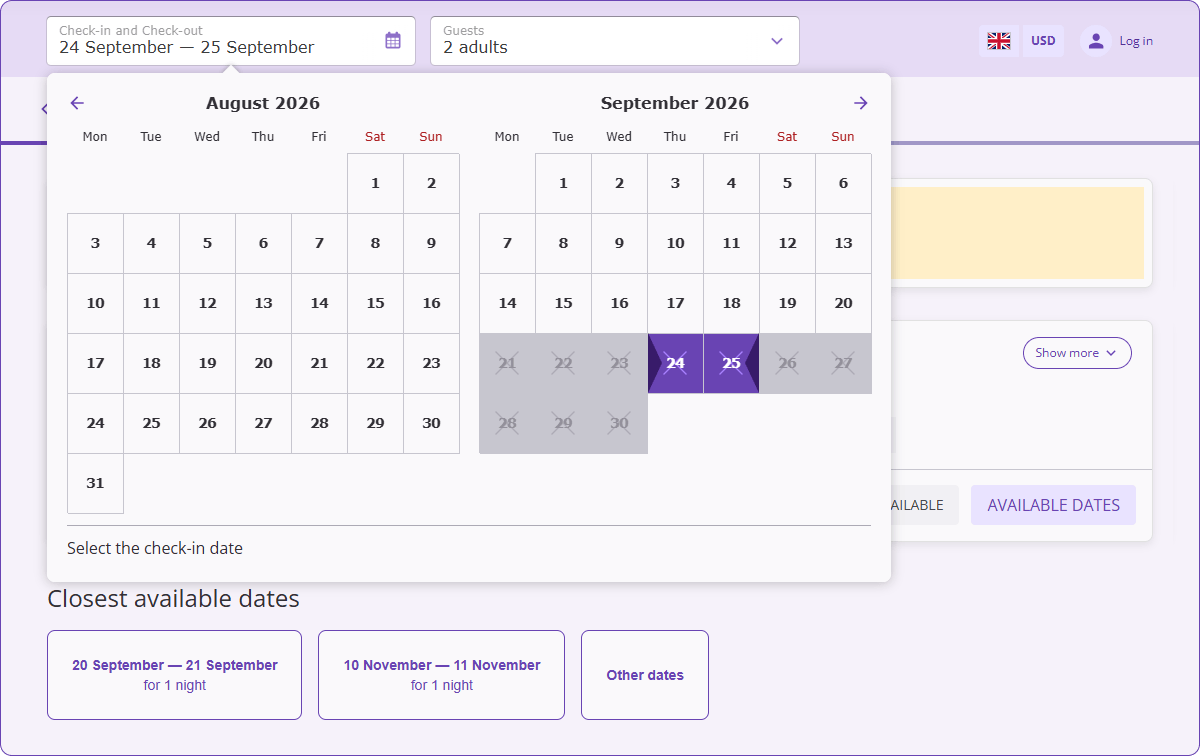
Guests planning vacations, business trips, or seasonal travel often search several months in advance. If your website only displays limited availability, they may assume rooms are unavailable and continue their search elsewhere.
Make sure:
Inventory is available at least 6–12 months ahead
Rates are updated automatically
Room availability matches all distribution channels
Step 2: Offer full inventory
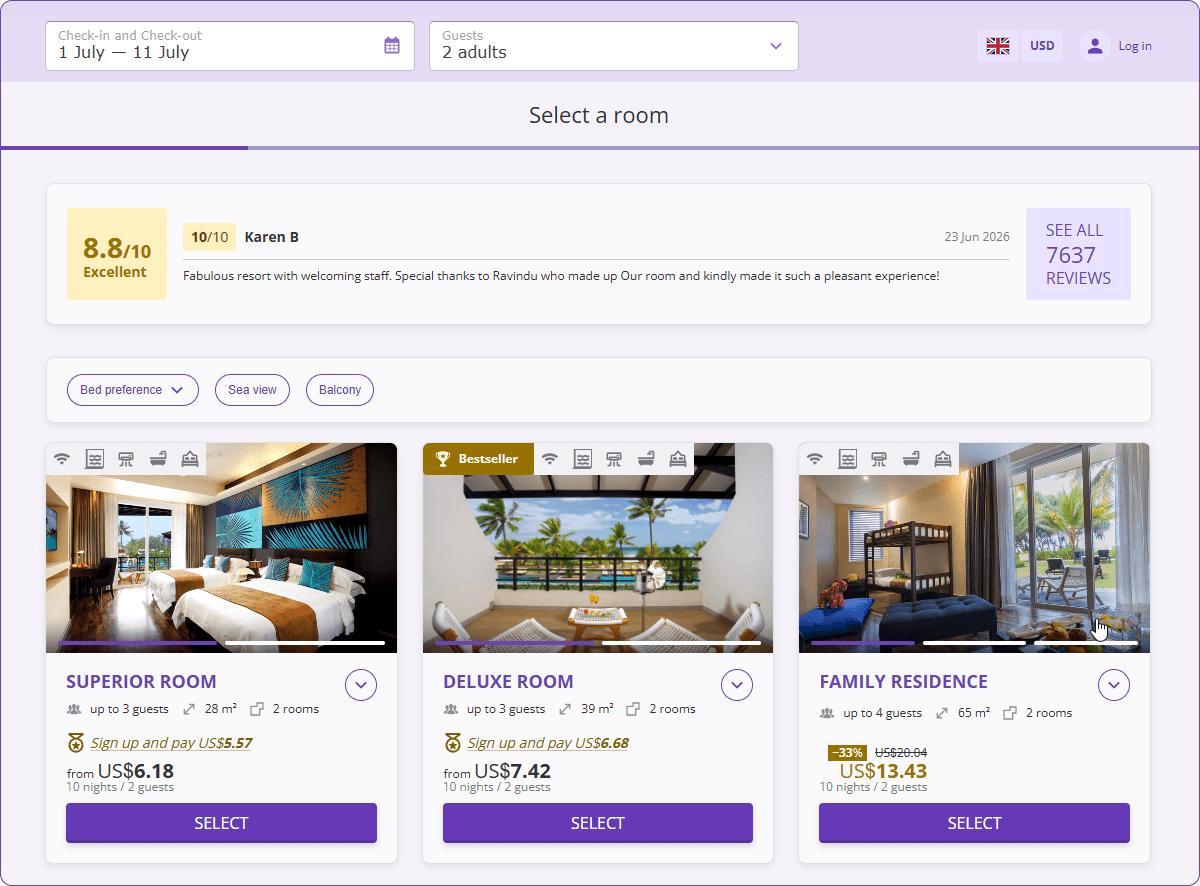
Many hotel websites showcase rooms but do not make every room category available for direct booking.
Guests should be able to book without leaving the website:
Standard rooms
Suites
Family rooms
Seasonal offers
Special packages
The more inventory available directly, the fewer reasons guests have to return to OTAs.
Step 3: Optimize the booking flow
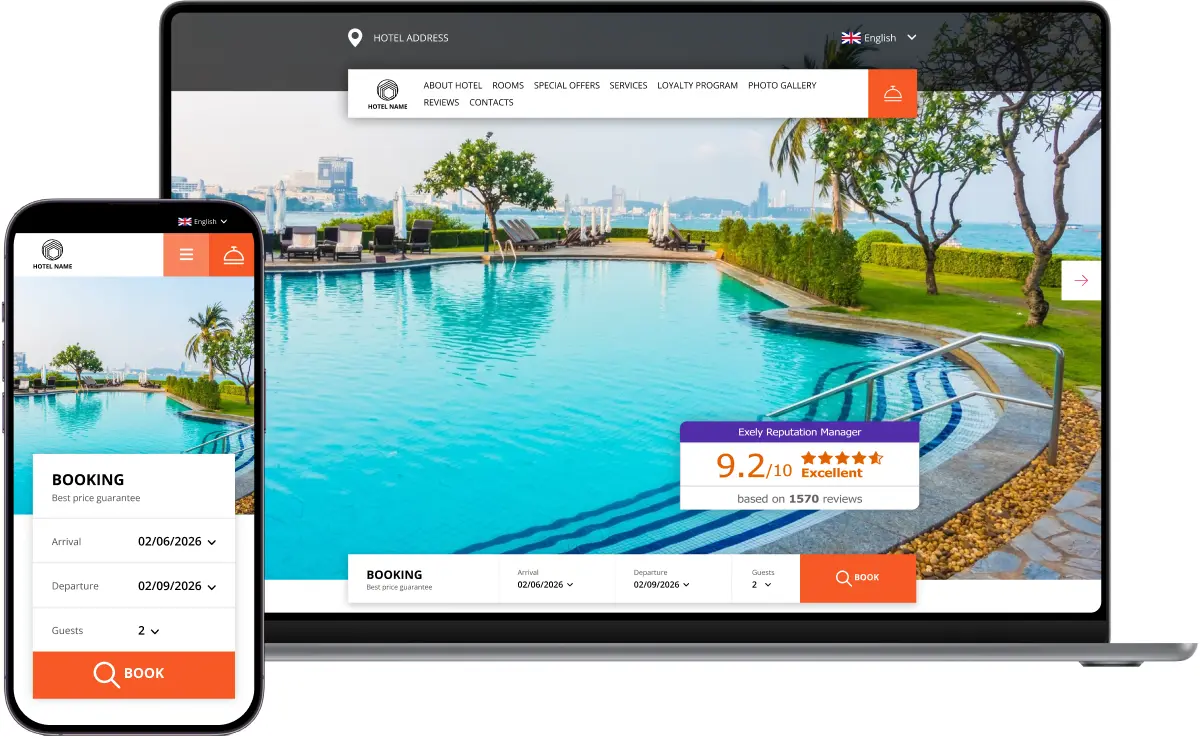
Every additional click creates friction. Guests should be able to move from homepage to booking confirmation in just a few steps.
A strong booking journey includes:
Prominent "Book Now" buttons
Visible availability search
Clear pricing
Mobile-friendly forms
Fast checkout process
Research consistently shows that complicated booking flows lead to abandonment.
Step 4: Understand How Guests Use Your Website
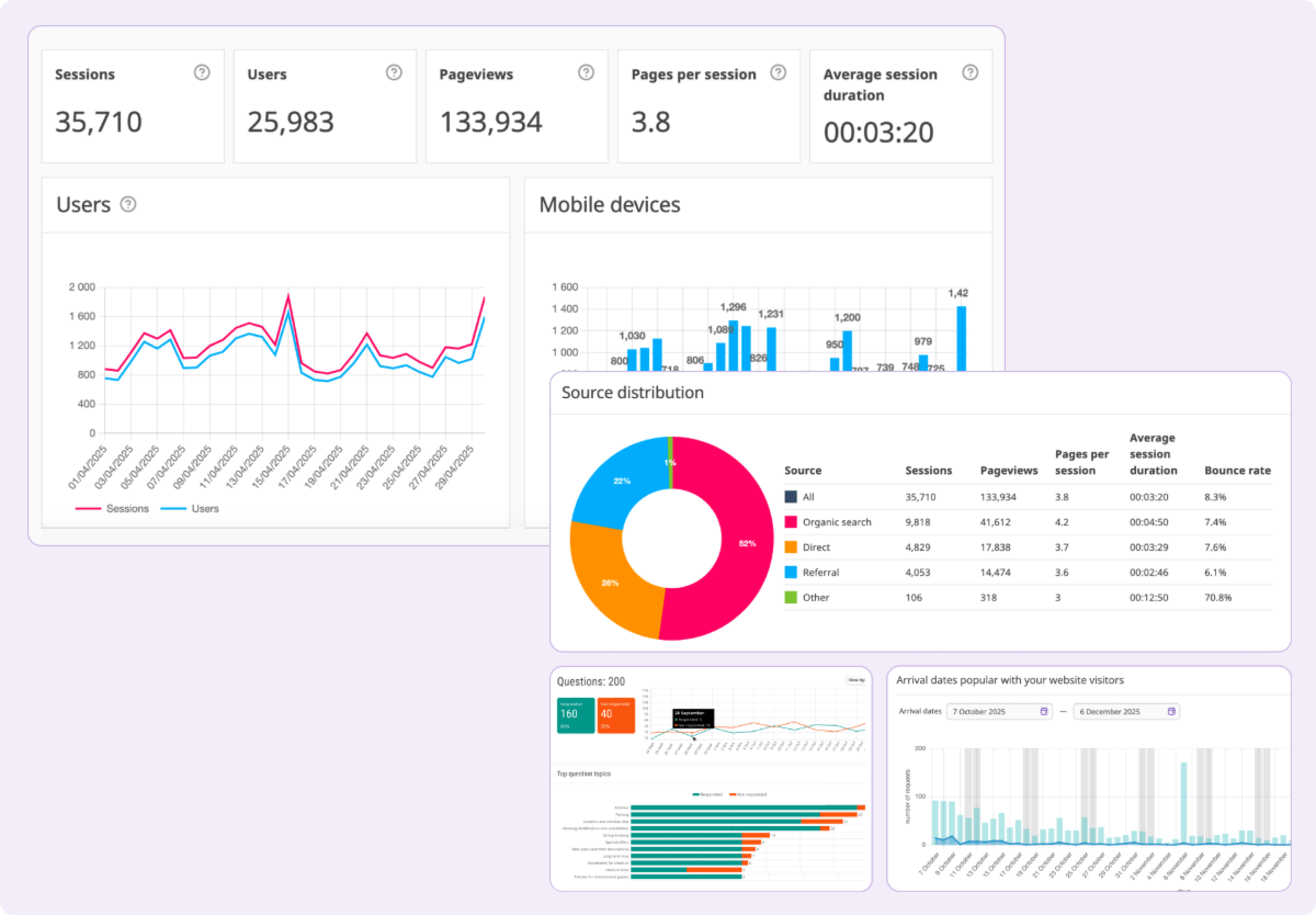
Hotels often focus on traffic while overlooking guest behavior. Analytics helps hotels identify booking barriers, understand guest intent, and improve website conversion rates.
Pay attention to:
Traffic sources to understand which channels bring the most valuable visitors.
Audience behavior to see which pages attract attention and where guests leave the website.
Website demand to identify stay dates guests search for and periods when rooms are unavailable.
Guest requests and questions to uncover missing information that may prevent bookings.
Website quality and AI visibility to identify content gaps that affect discoverability in search engines and AI-powered search platforms.
For Exely customers, Exely Analytics combines website performance, booking behavior, demand trends, and AI-powered insights in a single dashboard, helping hotels turn website data into actions that drive more direct bookings.
Step 5: Give Guests a Reason to Book Direct
Many hotels offer identical pricing on OTAs and their own websites. When guests see no difference, they often choose the platform they already know.
Hotels can encourage direct bookings through:
Exclusive website rates
Promo codes
Complimentary upgrades
Flexible cancellation policies
Additional services included in the rate
Even a small direct-booking advantage can influence booking decisions.
Why Direct Bookings Are More Profitable
Every direct booking helps hotels retain a larger share of revenue and reduce dependence on third-party channels. At the core, the difference comes down to simple math. Use our calculator to estimate how changes in your website share, ADR, and distribution mix could affect your annual revenue.
Calculate Your Website's Net Profit Potential
The calculator helps visualize:
Potential revenue recovered from OTAs
Growth in direct booking share
Impact on ADR and room revenue
Long-term financial benefits of increasing direct bookings
Revenue = Booking Value – Commission
Example:
Booking via OTA:
€200 – 20% commission = €160 net revenueDirect booking:
€200 – 0% commission = €200 net revenue
Long-term impact:
Higher margins per booking
Better customer relationships
Lower dependency on third-party platforms
Over time, even a small shift to direct bookings significantly increases total revenue.
How Exely Solves This Problem
Exely combines a hotel website builder and booking engine in one solution, helping hotels increase direct bookings while reducing reliance on OTAs.
-
Hotel-Focused Website Design
Website structure and user journeys designed specifically for hospitality. Easier navigation and a smoother path from discovery to booking. -
Built-In Booking Engine
Every website includes Exely Booking Engine, fully integrated from day one. Guests can check availability and book without leaving your website. Exely Booking Engine is recognized by HotelTechReport as a Top 3 Booking Engine for hotels. -
Easy Content Management
Update photos, room descriptions, offers, and website content without developer support. Keep information accurate and launch promotions faster. -
Fast Website Launch
Choose a professionally designed layout, upload content, and go live quickly. No coding or technical expertise required. -
Seamless Migration
Smooth transition from your existing website with minimal disruption to operations. -
Search and AI Visibility
Built-in SEO settings and structured website architecture help search engines and AI-powered search platforms better understand your property. -
Analytics and Performance Tracking
Integrates with Google Analytics and Google Search Console. Exely Analytics provides insights into website traffic, visitor behavior, booking demand, and conversion rates. -
Mobile-First Experience
Optimized for smartphones, tablets, and desktops with a consistent booking experience across all devices. -
Multilingual and International-Ready
Multilingual website translations and multiple currencies are supported for international travelers. -
Domain, Hosting, and Google Integration
Domain name and hosting included, plus Google Maps integration and Google Business Profile optimization support. -
Dedicated Hospitality Support
Launch specialists, Customer Success Managers, and ongoing technical support assist throughout setup, launch, and daily operations.
Frequently Asked Questions (FAQ)
-
Do I need a new website if I already have one?
Not necessarily. However, if your current website generates few direct bookings, lacks an integrated booking engine, is difficult to update, or provides a poor mobile experience, it may be limiting your revenue potential. A modern hotel website should help guests move from discovery to booking as quickly as possible while supporting SEO, AI visibility, and direct sales. -
How long does it take to launch a new hotel website?
The timeline depends on the amount of content that needs to be added and whether you're migrating from an existing website. With Exely Hotel Website Builder, hotels can launch significantly faster than with traditional website development projects because there is no need to build the website from scratch. -
Will I lose OTA bookings if I focus on direct bookings?
No. OTAs remain an important distribution channel and help hotels reach new audiences. The goal is not to replace OTAs completely but to create a stronger direct booking channel. When guests visit your website after discovering your hotel on an OTA, they should find a better booking experience and compelling reasons to book directly. -
Is it difficult to manage the website?
No. Exely Hotel Website Builder is designed for hotel teams, not developers. You can update photos, room descriptions, offers, and other website content through a user-friendly interface without coding knowledge or technical expertise. -
Can I track website performance and bookings?
Yes. Hotels can connect Google Analytics and Google Search Console to monitor traffic, visibility, and conversion rates. Exely customers can also use Exely Analytics to track booking trends, traffic sources, website demand, conversion performance, and other hotel-specific metrics from a single platform. -
Is the website optimized for mobile users?
Yes. All websites created with Exely Hotel Website Builder are designed to work across smartphones, tablets, and desktop devices. Since a large share of travelers research and book accommodation on mobile devices, responsive design is built into the platform. -
Why is an integrated booking engine important?
A booking engine creates a direct path from your website to a confirmed reservation. Without one, guests often leave the website and complete their booking through an OTA. Exely Booking Engine is fully integrated into every website and is recognized by HotelTechReport as a Top 3 Booking Engine for hotels. -
How do I get started?
The best place to start is by reviewing your current website performance, booking process, and channel mix. This helps identify opportunities to increase direct bookings and reduce OTA dependency. Our team can help assess your current setup and recommend the most effective next steps.